
Embodied Self-Compassion Core Skills


Embodied Self-Compassion Core Skills | January 30, 2027
Embodied Self-Compassion Core Skills | January 30, 2027
with Jorge Armesto & Courtney Mace
- January 30-31, 2027
- 9:00am - 4:30pm PT
- Time Conversion Link
Couldn't load pickup availability
Why Embodied Self-Compassion Core Skills?
Embodied SC Core Skills draws on the core practices of Mindful Self-Compassion (MSC), offered through CMSC. We will have an opportunity to engage in a process of guided self-study. We will practice mindful awareness, self-kindness, and common humanity through embodied practices, brief didactics and individual and group reflections. You do not need prior experience, flexibility, or training to join us. Every practice can be adapted to your body, your pace, and your nervous system.
Grounded in more than two decades of research, self-compassion is strongly associated with emotional resilience, reduced stress and burnout, increased motivation, and greater relational wellbeing. Through guided somatic practices you will explore how your body, and your relationship to it, can be sources for greater self-compassion in your daily life.
This offering is a benefit for the Center for Mindful Self-Compassion.
Meet Your Teachers:
Jorge C. Armesto is a bilingual clinical psychologist, yoga therapist and mindfulness instructor in Massachusetts and Rhode Island, United States, where he works with diverse communities. He is passionate about the intersection of psychology, mindfulness, spirituality, and somatic practices.
Jorge is a Certified Mindful Self-Compassion teacher and teacher trainer through Center for Mindful Self-Compassion (CMSC), Certified Yoga Therapist, and trained MBCT and MBSR Teacher. Jorge is section faculty at the Institute for Meditation and Psychotherapy Certificate Program and Senior Mindfulness Instructor at Cambridge Health Alliance Center for Mindfulness and Compassion. He also serves as faculty in the Self-Compassion in Psychotherapy (SCIP) Certificate Program through CMSC. Jorge practices in the Thich Nhat Hanh tradition and is a member of the Order of Interbeing. There are many ways that Jorge cultivates seeds of joy including hiking, cooking, dancing to the Afro-Cuban rhythms of salsa, weaving, crocheting and collaging. Above all, Jorge loves spending time with family and friends.
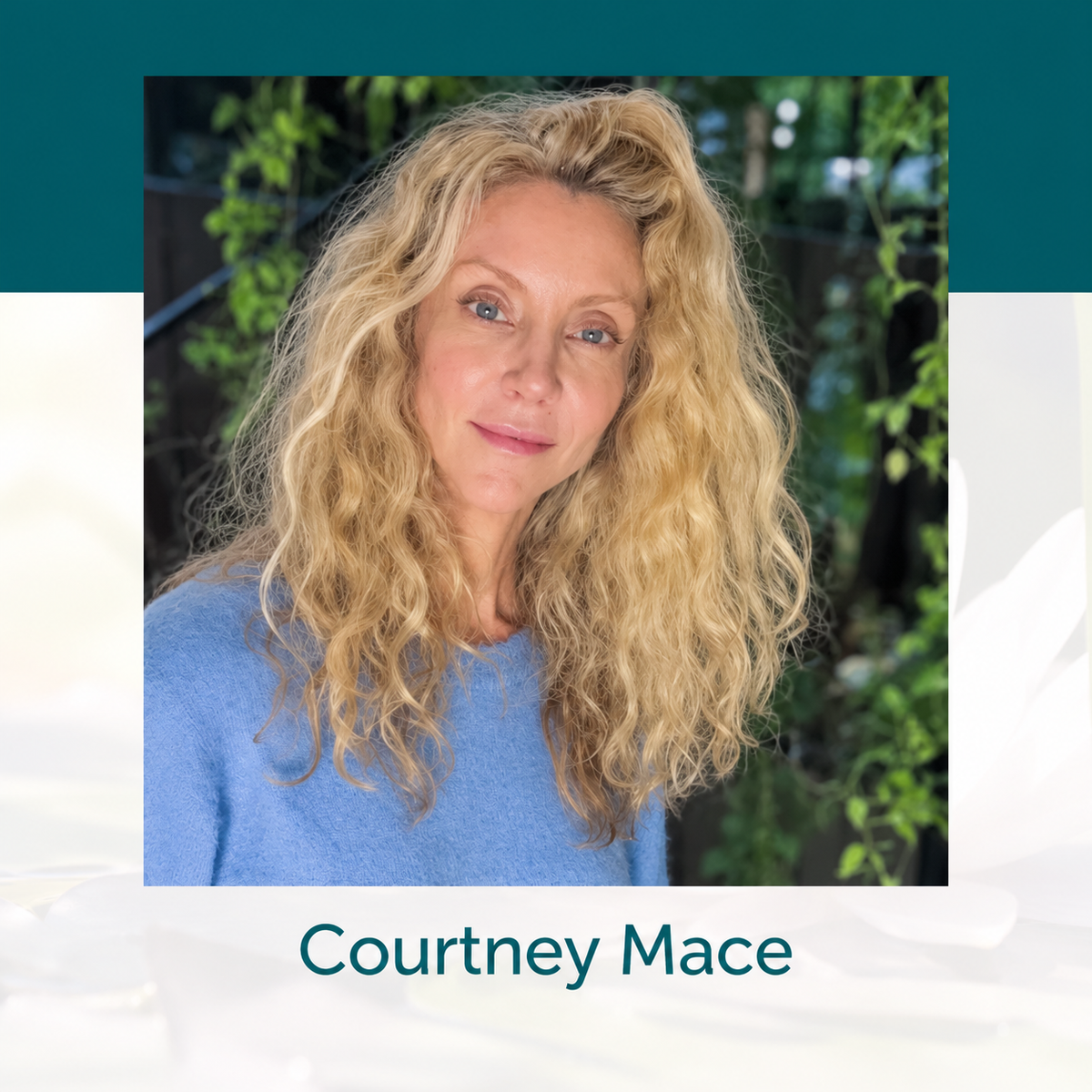
Courtney Mace is a yoga therapist, yoga instructor, and trained Mindful Self-Compassion teacher. Her work focuses on the mind-body connection and the cultivation of inner compassion for physical and psycho-emotional health. Drawing from somatic-based therapy, heart coherence, and contemplative practices, Courtney helps students develop greater self-connection and well-being through a kinder, more loving relationship with themselves and their experience.
Courtney is a freelance creative in NYC, a C-IAYT yoga therapist, E-RYT 500 yoga instructor, PRYT life mentor, and CMSC trained teacher.
Registration Closes January 29, 2027.
Share


Workshop Details
-
Course Description
Why Embodied Self-Compassion Core Skills?
Long before we learned the words for kindness, we knew it in our bodies. A hand moves to a racing heart. Shoulders soften when someone says, "I'm here." Breath slows, and the ground feels a little more solid underfoot. Compassion is not only an idea we think about or a phrase we repeat. It is something we can feel, in muscle and skin, in posture and pulse.
Here is the invitation: Trust the wisdom of the body. Our bodies carry a natural capacity for warmth and care that has been with us since the beginning. Often it is waiting beneath tension, hurry, and the habit of living from the neck up. When we slow down and turn toward physical sensation, through movement, touch, breath, and stillness, we begin to reconnect with that wisdom.
Finding compassion is the first step. The deeper offering of this self-compassion core skills training is learning to let that compassion hold us as we are: the tired body, the tender places, the feelings that arrive uninvited, the moments we would rather not have. Instead of trying to fix, outrun, or improve what we feel, we practice staying, with a steady and kind presence that says, this, too, belongs.
-
Additional Details
Who This Workshop Is For
Anyone is welcome to join this two-day course.
Access to Materials and Session Recordings
After you complete each course or workshop, you'll have access to the content for 90 days if you want to review it at your convenience.
Please note that we will record each live session, and the recordings will be available within 48 hours in the respective lesson of the course.
Refunds
For any refund requests, questions regarding the course or the registration process, please fill out the refund form here. -
Continuing Education Credits
Continuing Education Credit Information
Feel free to email hello@centerformsc.org for any follow-up CE questions.
Psychologists: Continuing Education Credit for this program is provided by UC San Diego Center for Mindfulness. The UC San Diego Center for Mindfulness is approved by the American Psychological Association to sponsor continuing education for psychologists. The UC San Diego Center for Mindfulness maintains responsibility for this program and its content. This course offers 11.0 hours of credit.
California licensed MFTs, LPCCs, LEPs, LCSWs: Continuing Education Credit for this program is provided by UC San Diego Center for Mindfulness. The UC San Diego Center for Mindfulness is approved by the American Psychological Association to sponsor continuing education for psychologists. 11.0 contact hours may be applied to your license renewal through the California Board of Behavioral Sciences.For those licensed outside California, please check with your local licensing board to determine if APA accreditation meets their requirements.
Nurses: UC San Diego Center for Mindfulness is approved by the California Board of Registered Nursing, Provider Number CEP16351, for 13.0 contact hours. -
Course objectives:
At the completion of this activity, participants should be able to:
- Identify the three key components of self-compassion and describe how each is experienced in the body
- Describe key research that supports the benefits of self-compassion
- Apply embodied techniques to increase self-compassion in everyday life
- Use embodied self-compassion practices to alleviate caregiver burnout
- Implement embodied self-compassion practice to motivate behavior change
- Develop and apply embodied self-compassion practices to respond to feelings of failure or inadequacy with self-kindness
- Recognize the physical signals of difficult emotions and respond with greater moment-to-moment acceptance
- Adapt embodied practices to their own needs and abilities, using choice and pacing to stay within their window of tolerance
FAQs & Important Information
If I'm unable to attend, can I request a refund?
Our entire Refund Policy is located here: https://centerformsc.org/cmsc-policies/
We encourage you to review the Refund Policy in its entirety. Below is important information that we would like you to be aware of before choosing to make a financial commitment with us.
All refund requests must be made via the refund request form at the link above.
Refunds must meet specific terms of eligibility to include the reason for requesting a refund.
Our Refund Policy (at the link above) includes details on when we are able and are not able to issue a full refund.
All refund request forms are reviewed by a small team of our staff. We ask for your patience and understanding when requesting a refund.
If you have any questions after reviewing our Refund Policy, feel free to reach out to us at hello@centerformsc.org
Important Info: Mindful Self-Compassion is not a substitute for Therapy
Our programs are designed to teach participants the tools needed to develop and cultivate a mindfulness and self-compassion practice.
It is not a substitute for mental health care, personal therapy or medical treatment.
Personal safety and emotional wellbeing are the foundation of self-compassion training and you are primarily responsible for your own safety.
Teachers and facilitators are not expected or able to provide medical and/or psychological care. Course experiences may bring up challenging memories or feelings.
If you have a history with a serious mental health condition or other concerns you think may impact your ability to take this course, please contact CMSC or your healthcare professional to determine if this course is right for you. Your personal contact information may be used in the event the teacher or facilitator reasonably determines a need to call emergency services on your behalf.
Important Info: Productive Participation in Courses & Workshops
Participation is at the discretion of the teachers and facilitators at all times.
If, in the opinion of the teachers and facilitators, you are unable to participate productively and appropriately in the course or workshop you have registered for, you may be asked to discontinue.
Decisions of removal are to ensure CMSC provides the safest space possible for our participants and teachers. Please see our refund policy regarding necessary participant removal.